Home automation refers to using technology to remotely control and automate household devices and systems, such as lighting, fans, appliances, security cameras, and more, using smartphones, voice commands, or pre-set schedules.
All kinds of electrical accessories such as lighting, fans, AC, entertainment systems, curtain controllers, Smart plugs for appliances, Security cameras, garden irrigation systems and many more can be easily automated in a home.
Home automation systems work through a combination of hardware (e.g., smart switches, sensors, actuators), software (e.g., mobile apps), and communicationprotocols (e.g., Wi-Fi, Zigbee, Bluetooth or through Wire) to control devices.
Home automation enhances convenience, security, and energy efficiency. It offers remote control of devices, customizable schedules, and integration with voice assistants. Features like smart lighting, automated appliances, and real-time monitoring improve comfort and reduce costs. Additionally, it enhances home aesthetics and prepares households for future IoT integration.
Home automation saves energy by automating lights, appliances, and climate control. Features like motion sensors, scheduled operations, and smart thermostats prevent wasteful usage. Real-time monitoring and remote control optimize consumption, while dimmers and ambient light sensors adjust settings for efficiency, reducing electricity bills and environmental impact.
Yes, home automation is safe and secure when implemented correctly. Systems use encryption, secure protocols, and user authentication to protect data. Regular software updates and strong passwords enhances security. Reputable brands prioritize safety, but users should avoid unsecured networks and ensure devices are from trusted manufacturers.
The initial cost of setting up a smart home varies based on the scope and devices chosen. Basic systems start around ₹20,000–₹30,000 for essential features like smart switches and lights. Comprehensive setups with advanced automation, security, and entertainment systems can exceed ₹1,00,000, depending on the brand and customization.
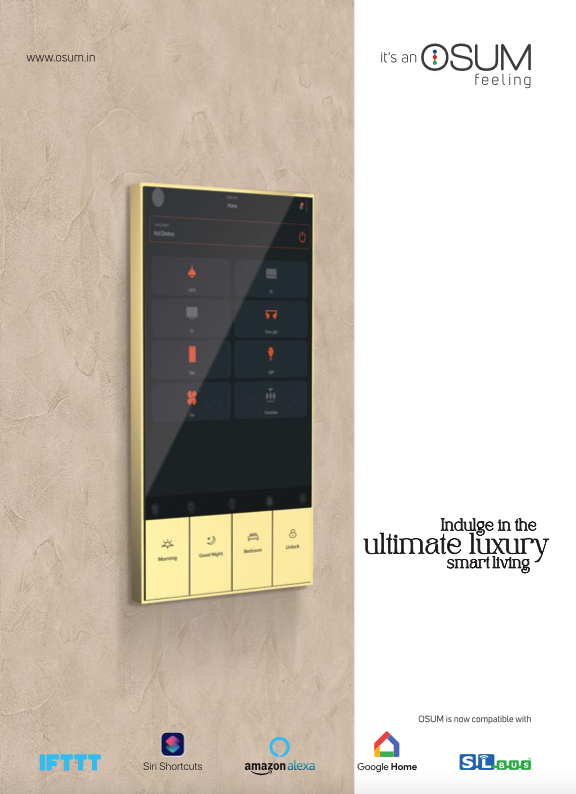
OSUM is an Indian brand specializing in smart automation solutions tailored for residential and commercial spaces. OSUM’s products are known for their advanced hybridtechnology, combining wired solutions with wireless capabilities, ensuring stability and flexibility in home automation systems, which allows seamless control of lighting, curtains, AV and appliances via smartphones or voice assistants, making your home smarter and future-ready.
9. OSUM Automation Devices are based on which protocol? OSUM automation devices primarily use SL-BUSprotocol. This hybrid approach combines wired and wireless technologies for reliability and scalability, catering to diverse home automation needs. Their devices are designed to integrate easily with standard networks, offering user-friendly installation and control.
No, OSUM automation devices do not require an external hub or controller. They are WiFi-enabled, allowing direct connection to your home network. This simplifies installation and gives seamless control, providing a hassle-free smart home experience without the need for additional processors or hubs.
OSUM automation offers simple wiring, especially with its hybrid technology that combines both wired and wireless options. Many devices feature plug-and-play designs, minimizing installation complexity. For wired systems, the process is straightforward and typically involves minimal modifications, making it easy to integrate into existing home setups.
Yes, OSUM automation is highly user-friendly. Its devices are designed for easy installation with minimal wiring, and the mobile app interface is intuitive, allowing users to control lighting, appliances, and security features effortlessly. Additionally, OSUM products integrate seamlessly with voice assistants, enhancing convenience and ease of use.
Yes, you can control OSUM automation devices remotely. Through their mobile app, you can manage lighting, appliances, security systems, and more from anywhere. The system also integrates with voice assistants, allowing voice-based remote control for added convenience.
If your home internet goes down, OSUM automation devices that rely on Wi-Fi, will lose remote access and cloud-based features. However, devices like smart switches or local controllers that don’t depend on constant internet connectivity will still function normally. Once the internet is restored, remote control and automation resume.
OSUM automation integrates with voice assistants like Alexa, Google Assistant, and Siri for voice control. It also works with home automation systems like Homekit. offering a fully connected and seamless smart home experience.
Yes, OSUM automation can be easily integrated with many other home automation brands with their Open APIs. With platforms like Alexa and Google Assistant, OSUM devices can interact with a variety of third-party devices, offering greater flexibility in creating a unified smart home system.
Along with the Smart home-based products, OSUM can provide you other electrical accessories like conventional switches and sockets, regulators, dimmers etc. our wide range of cover plates with different material and finishes can enhance your home aesthetics.
Yes, OSUM is a Made in India brand. The company designs and manufactures its smart home automation products locally, focusing on catering to the unique needs of Indian households while supporting domestic manufacturing.
OSUM offers a 2-year warranty on most of its automation devices. This covers manufacturing defects and ensures product reliability. For specific products, it’s advisable to check the warranty terms on OSUM’s official website or product documentation, as details may vary by model.
OSUM provides comprehensive after-sales service, including customer support for troubleshooting, installation assistance, and guidance on product usage. They offer warranty services for defective products and ensure timely repairs or replacements. Additionally, OSUM offers software updates and continuous support for smooth integration and optimal performance of their automation devices.